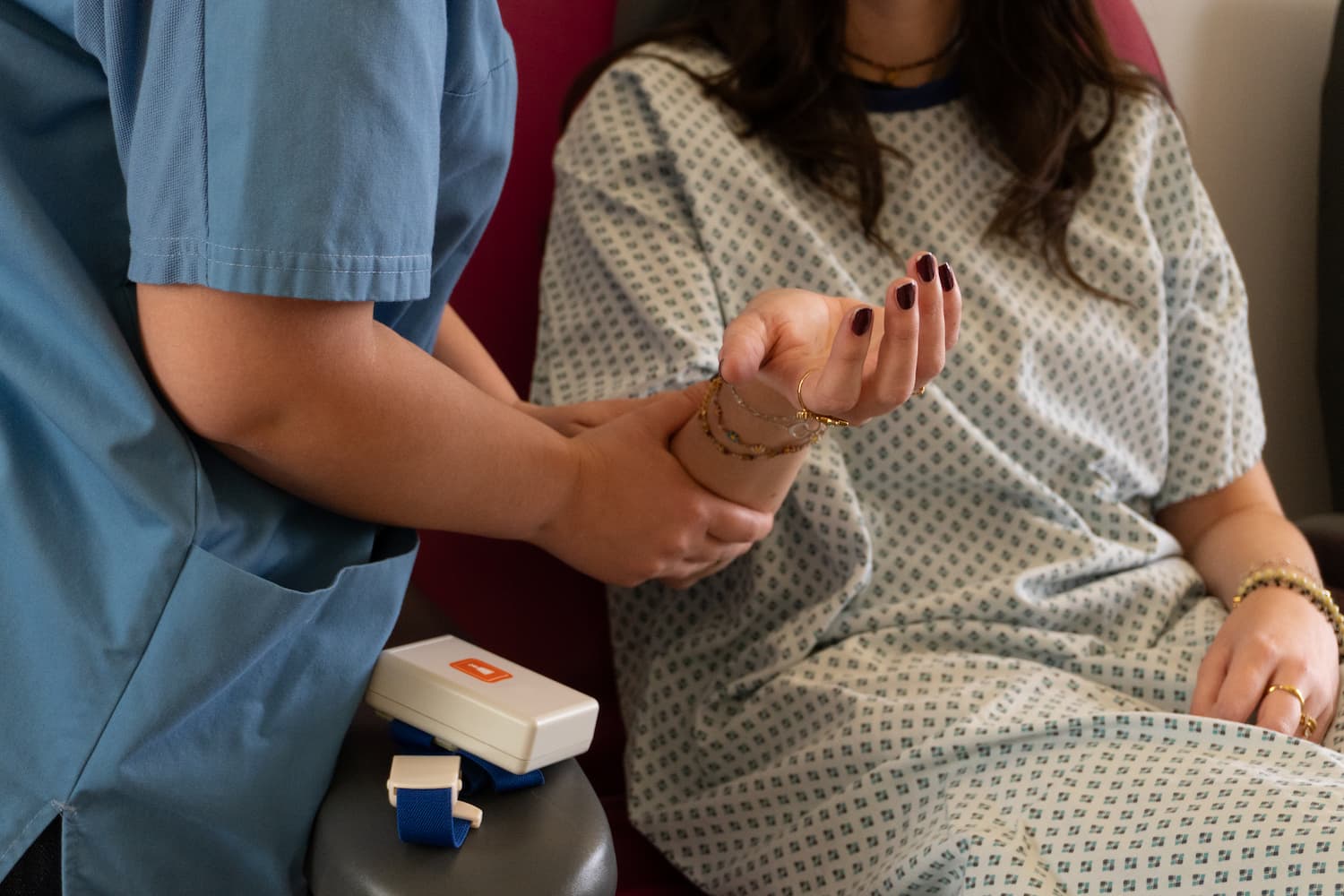
This guide explores modern nurse call systems designed to ensure continuous patient alerts and patient safety. It highlights autonomous, reliable, and scalable solutions that support care teams and adapt to the operational needs of healthcare facilities.
Patient and resident safety often depends on a simple action: pressing a button to call for help.
However, behind this simple action, an entire system must operate flawlessly, 24/7. Yet many healthcare facilities still rely on aging technologies or systems that depend on networks vulnerable to outages.
This guide aims to help healthcare facilities understand the limitations of current technologies, assess their risks, and discover modern solutions, such as autonomous nurse call systems, capable of ensuring the continuity of patient alerts even in the event of a network outage.
In hospitals, nursing homes, and specialized care centers, many nurse call systems installed more than ten years ago rely on wired infrastructure. While theoretically reliable, these installations quickly become rigid: any building extension or modification requires costly and time-consuming work, causing the system to become outdated rapidly.
More recent Wi-Fi or GSM-based solutions offer welcome flexibility. However, their reliance on local networks or mobile coverage exposes them to disruptions: Wi-Fi outages, router reboots, or interference can block alerts, directly impacting patient and resident safety.
Before investing in an upgrade, assess your current risks by asking yourself the following questions:
If you answered “no” or “uncertain” to several of these questions, your infrastructure likely deserves an upgrade.
Today, healthcare facilities mainly rely on three major types of solutions to manage patient calls: modernized wired systems, Wi-Fi/IP solutions, and autonomous systems.
Each approach addresses different constraints in terms of infrastructure, budget, and service continuity.
Focus on NorAlert:
NorAlert, an autonomous nurse call solution developed by DigiMedis, is based on LoRa technology and operates entirely independently of Wi-Fi and GSM networks.
This ensures continuous patient alerts even in the event of a network outage.
With low-frequency communication, minimal energy consumption, and extended range, it is ideally suited for large sites as well as multi-building nursing homes.
With no subscription and no heavy maintenance requirements, it significantly simplifies the day-to-day work of technical managers.
A good nurse call system must meet five key requirements:
NorAlert meets all of these criteria: deployable within a few hours, scalable across multiple buildings, and designed to operate autonomously, it provides a robust solution for technical managers and facility directors.
Testimonial from Fabienne De Zorzi, Director of Strategy and Development at CHU de Liège
Before DigiMedis, Liège Hospital was facing critical equipment obsolescence. Spare parts had become unavailable, forcing technical staff to manufacture them manually just to keep the system operational. As a result, some rooms were left without a functional nurse call system, creating significant anxiety for both patients and care teams.
The deployment of NorAlert, DigiMedis’ nurse call solution, restored a reliable and secure system across the entire facility. It is easy to deploy and adapts seamlessly to room changes or the addition of new beds.
Autonomous nurse call systems now provide a concrete, reliable, and scalable response to the technical challenges faced by modern healthcare facilities.
Would you like to assess the resilience of your current system or test an autonomous solution?

This guide explores modern nurse call systems designed to ensure continuous patient alerts and patient safety. It highlights autonomous, reliable, and scalable solutions that support care teams and adapt to the operational needs of healthcare facilities.
Read moreLearn how new technologies, including LoRa technology, are revolutionizing hospital safety by offering reliable and autonomous solutions for the protection of patients and caregivers.
Read moreLearn how LoRa technology is revolutionizing the healthcare industry by enabling more reliable and effective medical communication
Read moreHow to guarantee effective management of hospital emergencies despite technical limitations? Learn how autonomous nurse call systems, based on LoRa technology, are revolutionizing hospital emergency management.
Read more

